

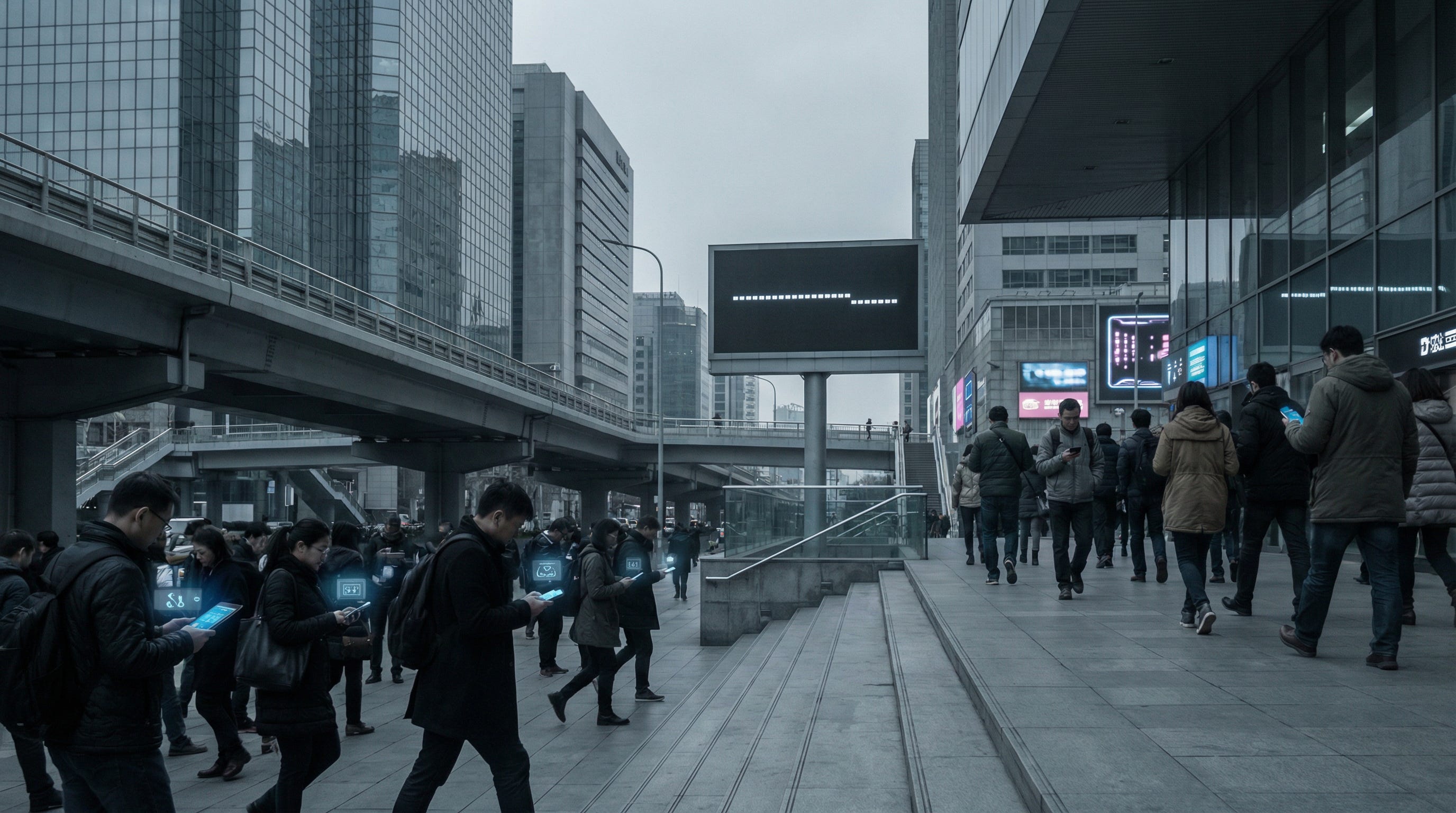
Your neighbor believes things you find incomprehensible. You believe things they find dangerous. You’re both drawing from sources the other considers propaganda, from experts the other considers compromised, from institutions the other considers captured.
Democracies can handle disagreement. This is something else. This is fracture.
It’s global. Brexit Britain. Bolsonaro’s Brazil. Polarized America. Rising nationalist movements across Europe. The pattern repeats everywhere: institutional trust collapses, truth bubbles harden, shared ground vanishes. We’ve moved beyond arguing about what policies best serve common goals. We’re arguing about what happened yesterday. What occurred, not merely what it means. The disputes are factual before they’re interpretive.
When shared reality dissolves, shared institutions follow. And when shared institutions dissolve, you get what historians call a turning.
History moves in cycles. The rhythm isn’t mechanical, but it’s recognizable. Neil Howe mapped approximately eighty-year patterns in Anglo-American history: four phases repeating like seasons. High, Awakening, Unraveling, Crisis. Each full cycle produces fundamental reordering. Each crisis phase (the Fourth Turning) breaks the old order and forges something new.
The American pattern: the Revolution, the Civil War, the Depression and World War II. Each arrived roughly eighty years after the last. Each felt, to those inside it, like the end of everything familiar. Each produced institutions that structured the next cycle.
But here’s what matters: the crisis event never was the turning. The turning was the legitimacy collapse that preceded it. By the time shots were fired at Lexington, colonial trust in British governance had already shattered. By the time Fort Sumter fell, the union had already fractured in practice. The visible crisis resolved what had already broken. The turning was underway years before anyone recognized it.
That’s what we’re watching now. The preconditions. The legitimacy collapse that makes crisis inevitable.
Howe thought the current turning would climax by the early 2030s. Whether his timeline holds, I don’t know. Frameworks illuminate; they don’t predict. But the pattern recognition matters: we are inside something, not observing it from outside. And that changes what’s demanded of us.
The visible breakdown is epistemological. We cannot agree on what’s true.
Martin Gurri diagnosed the mechanism. The digital revolution shattered elite monopoly on information. For most of human history, what counted as news, as fact, as legitimate knowledge was filtered through institutions: newspapers, universities, governments, credentialed experts. The public received truth from above.
That broke. Catastrophically, and faster than anyone anticipated. Suddenly everyone could publish, broadcast, investigate, accuse. The failures and hypocrisies that institutions once hid became visible. And they were extensive.
The public revolted. But (and this is Gurri’s crucial insight) the revolt defined itself by negation. The public knew what it was against: elites, experts, the establishment, the system. It did not know what it was for. Institutions were delegitimized but not replaced. The result is a vacuum where shared truth used to be.
Neil Postman saw it coming from a different angle. The medium shapes the message. Television turned news into entertainment, politics into performance, discourse into spectacle. Social media completed what television began. The platforms select for engagement, and engagement means emotion: outrage, fear, tribal solidarity. What spreads isn’t what’s true. What spreads is what activates.
We cannot think clearly because the forms through which we communicate no longer support clear thinking.
And beneath the surface, preference falsification (Timur Kuran’s term) compounds the distortion. People misrepresent their beliefs under social pressure. What you see in public opinion isn’t what people actually think. It’s what they’re willing to say given the social costs of dissent. The result is a hall of mirrors. Preference falsification explains why reform seems impossible until sudden rupture, why regimes that look stable collapse overnight, why societies can shift faster than anyone predicted.
That’s turning dynamics. Pressure building invisibly. Then release.
But distrust alone doesn’t explain what’s happening. Societies have weathered distrust before. What makes distrust metastasize into turning conditions is what lies underneath it: a pervasive vacancy. Call it malaise. Call it alienation. Call it the slow withdrawal of investment in anything beyond the self.
People who feel ownership push back, reform, engage. They defend institutions because those institutions feel like theirs to defend. People who feel like passengers (or worse, victims of the system they’re nominally part of) don’t defend anything. They watch the house burn. Sometimes they cheer.
Fromm understood this. Freedom isn’t just a gift. It’s a burden. The weight of self-determination, of choosing who to be and what to value, creates anxiety that many cannot bear. When that weight isn’t matched with meaning, with stake, with genuine investment, people drift. They go through motions without ownership. They become what they’re supposed to be without ever choosing it. Fromm called this “automaton conformity.” It looks like participation. It’s actually absence.
The escaped slave and the comfortable drifter have opposite problems but arrive at the same vulnerability: neither feels the institutions are theirs to maintain.
Hoffer saw what fills the vacuum. The frustrated individual (his term) is someone with no stake in the present order. Weak selfhood. No internal source of meaning. This person is raw material for mass movements. The movement’s doctrine is almost irrelevant; what matters is what the movement offers: identity, belonging, purpose. Someone to blame. Something to be. The costume differs left and right; the psychological function is identical.
Victimhood becomes identity because victimhood provides meaning when nothing else does. The movement says: you’re not failing, you’re oppressed. You’re not lost, you’re fighting. You’re not empty, you’re righteous.
Emerson saw the foundation that’s missing. Self-reliance. The capacity to trust yourself, generate meaning internally, choose values rather than inherit them. When that foundation fails (and Emerson thought society conspired against it), people adopt tribal positions. They define themselves by opposition. They know who they’re against because they don’t know who they are.
The connection between distrust and malaise is this: distrust metastasizes because no one feels invested enough to repair trust. You don’t fix a house you’re renting. You don’t defend institutions you feel alienated from. The epistemological collapse and the psychological vacancy feed each other. We can’t share truth because we don’t share stake. We don’t share stake because we can’t see ourselves in common institutions. The spiral tightens.
Previous turnings ended. Crisis gave way to new order. What made that possible?
The turning ends when a new order emerges that enough people accept as legitimate. That requires both destruction and reconstruction, and reconstruction is the harder part.
The founders built durable institutions through compromise, argument, practical wisdom. They disagreed violently about almost everything: federal power versus states’ rights, agrarian versus commercial economies, slavery (the wound they couldn’t close). The Constitution wasn’t consensus. It was negotiated truce that held because enough people decided to make it hold.
But they had something the current moment lacks: investment. Stake. The founders weren’t passengers. They were building something they believed they owned. Many risked execution for treason. They had, as the phrase goes, skin in the game.
McCullough’s account of 1776 shows how close it came to failing. Washington’s army nearly dissolved from cold, hunger, and despair. The Revolution survived because enough people decided, in specific moments of doubt, to continue. Ellis documents the personal feuds and near-fractures that could have broken the early republic. The institutions held because individuals chose to make them hold, often against their own interests and grievances.
What happens when no one makes that choice? When everyone’s a passenger? When the malaise runs deep enough that the house burning feels like someone else’s problem?
That’s the untested variable of this turning. Previous crisis phases had clearer battle lines. External enemies. Geographic fractures. This one is diffuse. The dissolution isn’t between North and South. It’s between realities layered on the same geography. And the malaise means even those who see the fracture may not feel enough ownership to repair it.
The turning will resolve. History doesn’t pause. Some new order will emerge: more authoritarian or more free, more centralized or more distributed, more coherent or more fragmented. The question is what kind.
And that depends on what we bring into it.
The publication you’re reading exists because of this conviction: preparation matters more than prediction. Understanding why people flee freedom. Recognizing manipulation, tribal epistemology, the forces that tear societies apart. Knowing the history well enough to maintain the inheritance. Building the inner strength to bear liberty when liberty is hard.
Strong people make strong institutions. Weak people make weak institutions (or strongmen who exploit weakness). The chain from individual to civilization doesn’t skip links.
I’m not telling you to do anything. I’m describing what the pattern suggests: the quality of what emerges from a turning depends on the quality of the people inside it. Their capacity for self-determination. Their willingness to hold stake in something beyond their own tribe. Their ability to tolerate disagreement without demanding the other side’s destruction.
Whether enough people can move from passenger to owner (from malaise to investment, from victimhood to agency) is the open question. The Fourth Turning will answer it. We’re the ones who have to live inside the answer.
Return to where we started. Your neighbor in a different reality. The sources you don’t share. The facts you can’t agree on.
The fracture won’t heal because one side wins and the other submits. It heals (if it heals at all) when enough people decide shared institutions are worth maintaining despite disagreement. That requires something the current moment doesn’t provide: stake. Ownership. The belief that this thing is mine to maintain, even when I’m furious at what my countrymen believe.
I don’t know if we can rebuild that. I don’t know if the malaise has run too deep, the distrust too far. I know only that the turning is here, and what emerges depends on what we do inside it.
Sources and Inspiration
The Fourth Turning Is Here - Neil Howe
The Revolt of the Public - Martin Gurri